DevOps vs DevSecOps: What Are the Differences?
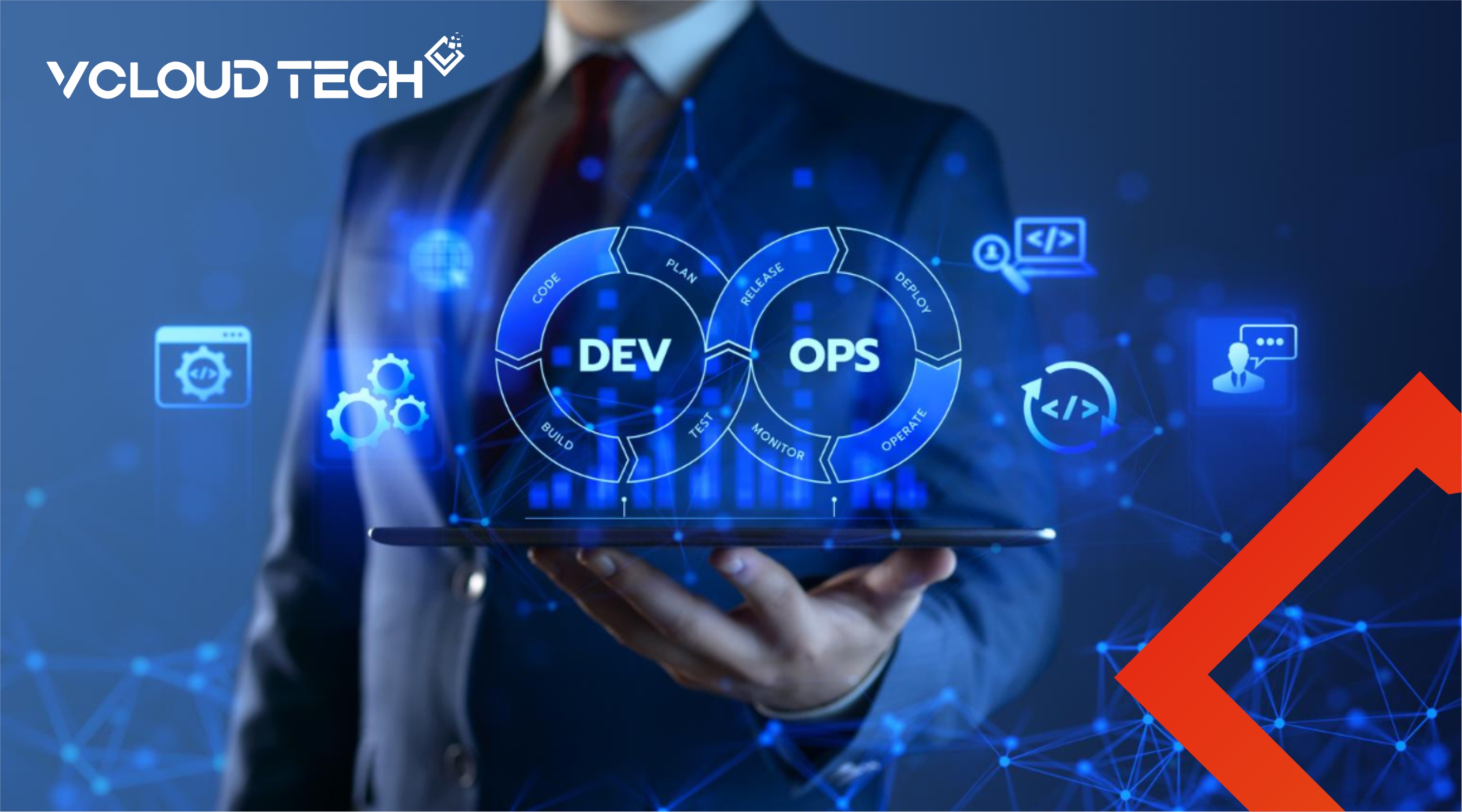
DevOps vs DevSecOps: What Are the Differences?
Modern software development is no longer judged only by how quickly an organization can build and release applications. Businesses also need to know whether those applications are secure, compliant, resilient, and capable of withstanding increasingly sophisticated attacks.
This shift has changed the way organizations approach software delivery. Development and operations teams have adopted collaborative, automated approaches to accelerate software delivery, while security teams are increasingly being brought into the same lifecycle. This is where DevSecOps becomes important.
At a high level, the difference between DevOps and DevSecOps is not that one focuses on development and operations while the other simply adds a few security tools. The bigger difference is where security responsibility sits, when security activities occur, how risks are managed, and how security becomes part of everyday engineering workflows.
NIST's current work on secure software development describes this model as integrating security throughout the software development lifecycle, supported by practices such as shift-left security, automation, security as code, continuous monitoring, vulnerability management, and Zero Trust.
For enterprises operating cloud-native applications, APIs, containers, Kubernetes environments, microservices, and increasingly complex software supply chains, understanding this distinction is critical.
What Is DevSecOps and How Does It Differ From DevOps?
It stands for Development, Security, and Operations. It extends the collaborative and automated principles of DevOps by making security a continuous responsibility across the software development lifecycle rather than treating it as a separate activity near the end of development.
Traditional development models often follow a sequence similar to:
Plan → Develop → Test → Deploy → Secure
The problem is that security testing may happen late in the process. If a vulnerability is discovered after an application has already been developed, tested, or deployed, fixing it can require significant rework.
A security-integrated lifecycle looks more like:
Plan → Develop + Secure → Build + Secure → Test + Secure → Release + Secure → Deploy + Monitor
Security is therefore not a final checkpoint. It becomes part of the engineering workflow.
NIST's 2026 DevSecOps guidance emphasizes several characteristics of this approach, including shift-left security, automated security testing, collaboration among development, security, and operations teams, security-enabled CI/CD pipelines, security as code, continuous monitoring, vulnerability management, AI capabilities, and Zero Trust principles.
What does DevSecOps stand for?
The term simply combines:
Dev — Development
Sec — Security
Ops — Operations
However, its meaning goes beyond the three words. The objective is to create a shared approach in which developers, security professionals, and operations teams collectively contribute to secure software delivery.
Definition of DevSecOps
A practical definition is:
A software delivery approach that integrates security practices, controls, automation, and monitoring throughout the software development lifecycle.
This means security requirements can be considered during planning, code can be analyzed during development, dependencies can be scanned during builds, applications can undergo automated security testing, infrastructure can be validated before deployment, and production environments can be continuously monitored.
That is the fundamental idea behind the DevSecOps methodology.
DevOps vs DevSecOps: The Key Differences
The two approaches share many principles, but their priorities and responsibilities are different.
Area | DevOps | DevSecOps |
Primary focus | Speed, collaboration, reliability, and delivery | Speed, reliability, delivery, and security |
Security ownership | Often concentrated within security teams | Shared across development, security, and operations |
Security timing | May occur later in the lifecycle | Embedded throughout the lifecycle |
Testing | Functional and performance testing | Functional, performance, and security testing |
Automation | Build, deployment, infrastructure, and testing automation | Delivery automation plus security automation |
CI/CD | Focuses on fast and reliable delivery | Integrates security controls into the pipeline |
Risk management | Often handled separately | Integrated into engineering workflows |
Compliance | Frequently treated as a separate requirement | Increasingly automated and integrated |
Monitoring | Application and infrastructure performance | Performance, infrastructure, threats, vulnerabilities, and security events |
Development culture | Shared development and operations responsibility | Shared development, security, and operations responsibility |
Main outcome | Faster and more reliable software delivery | Faster, more reliable, and more secure software delivery |
The important point is that DevSecOps does not replace the underlying principles of DevOps. Instead, it expands them by making security a continuous engineering concern.=
Why Are Organizations Moving Toward Security-Integrated Development?
Modern applications have become significantly more distributed.
A single enterprise application may depend on:
Public cloud services
Open-source libraries
Third-party APIs
Container images
Kubernetes clusters
Infrastructure as code
CI/CD platforms
Identity services
Databases
SaaS platforms
External software components
Automated deployment systems
This creates a much larger attack surface.
A vulnerability in one dependency can potentially affect an application that appears secure at the source-code level. Similarly, an improperly configured cloud resource can create a security exposure even when the application itself contains no obvious vulnerability.
NIST notes that modern software is composed of many components and processes, some controlled directly by the software producer and others belonging to interconnected supply chains. The organization therefore emphasizes continuous security monitoring and risk-based secure development practices.
This is why secure software development is increasingly becoming an engineering responsibility rather than something performed only by a dedicated security department.
1. Security Moves Earlier in the Software Lifecycle
One of the biggest differences is timing.
In a traditional delivery model, developers may complete an application before a security team performs a detailed assessment. This creates a potential bottleneck.
Suppose a team develops an application over three months. During final testing, a security assessment identifies:
SQL injection vulnerabilities
Insecure authentication
Vulnerable dependencies
Improper access controls
Exposed credentials
Container vulnerabilities
The development team may then need to modify code, retest the application, rebuild artifacts, and potentially change the deployment architecture.
A shift-left approach attempts to identify these problems much earlier.
For example:
Developer writes code → automated code analysis → dependency scan → security feedback → developer fixes issue
Instead of waiting until release preparation, security becomes part of normal development.
This approach is often referred to as shift-left security.
The objective is not to move every security activity to the beginning of the lifecycle. Some security controls necessarily belong later, particularly runtime monitoring and incident response. The goal is to distribute security throughout the lifecycle.
2. Security Becomes a Shared Responsibility
A major cultural difference is ownership.
In organizations with separate development and security processes, developers may assume:
"Security is the security team's responsibility."
That mindset creates delays and gaps.
A security-integrated model encourages developers to understand secure coding, security testing, dependency risks, secrets management, and basic threat modeling.
Security specialists, meanwhile, work more closely with engineering teams to translate security requirements into practical controls and automated workflows.
Operations teams contribute through:
Secure infrastructure configuration
Identity and access controls
Monitoring
Logging
Runtime protection
Infrastructure security
Incident response
This shared responsibility is central to the DevSecOps culture.
It does not mean every developer needs to become a cybersecurity specialist. Instead, developers should have the tools, guidance, feedback, and automation necessary to make secure decisions without requiring security teams to manually inspect every change.
3. CI/CD Pipelines Become Security Control Points
Continuous integration and continuous deployment make it possible to release software rapidly.
But speed creates a challenge: if the pipeline is automated, it can also automate the delivery of insecure software.
That makes CI/CD security particularly important.
A mature pipeline may contain security checks such as:
Secret detection
Static code analysis
Dependency scanning
Software composition analysis
Container image scanning
Infrastructure configuration checks
Dynamic application security testing
Compliance validation
Artifact verification
Deployment policy enforcement
Instead of security being a separate activity, controls are embedded into the software delivery pipeline.
For example:
Pipeline Stage | Possible Security Activity |
Code commit | Secret scanning |
Build | Dependency analysis |
Package | Artifact verification |
Test | Security testing |
Containerization | Container security scanning |
Infrastructure provisioning | Infrastructure policy validation |
Release | Compliance checks |
Deployment | Security policy enforcement |
Production | Security monitoring |
This creates a pipeline security model in which risky changes can be detected before reaching production.
4. Automation Becomes More Security-Aware
Automation is central to modern software delivery, but security requires more than simply automating deployments.
Security automation can automate repetitive security activities while maintaining consistent controls across applications and environments.
Examples include:
Automated vulnerability scanning
Automated security testing
Automated compliance checks
Automated secrets detection
Automated policy enforcement
Automated incident notifications
Automated remediation workflows
Automated dependency updates
Automated infrastructure validation
This is where DevSecOps automation creates practical value.
For example, an organization could configure its pipeline so that a critical vulnerability in a production dependency automatically triggers an alert and prevents the affected artifact from being promoted.
The security team does not need to manually inspect every build.
However, automation should not mean blindly blocking everything. Excessive false positives can frustrate developers and encourage teams to bypass security controls.
Effective automation should therefore be risk-based.
5. Application Security Becomes Part of Development
Application security is one of the most important areas affected by this transition.
Modern application security can include:
Secure coding practices
Threat modeling
Code analysis
Vulnerability scanning
Authentication testing
Authorization testing
API security
Dependency analysis
Security testing
Runtime monitoring
Security issues can originate from code, dependencies, configuration, infrastructure, or third-party components.
For example, a developer may introduce an application feature that uses an open-source package. The package itself could later receive a vulnerability disclosure.
Without continuous dependency monitoring, the organization may not know that an application is affected.
A mature DevSecOps process therefore continues after deployment.
Security becomes a lifecycle rather than a single assessment.
6. Development Security Extends to the Software Supply Chain
Modern applications frequently depend on software created outside the organization.
This creates software supply chain risk.
A typical application may contain:
Proprietary source code
Open-source packages
Container images
Third-party libraries
Build tools
Cloud services
External APIs
An attacker who compromises one of these components may potentially affect downstream applications.
This makes software supply chain security increasingly important.
Organizations can strengthen their software supply chain by using:
Dependency inventories
Software bills of materials
Provenance information
Artifact signing
Trusted repositories
Dependency scanning
Version controls
Build integrity checks
Vulnerability management
Access controls
NIST's SSDF specifically includes practices for protecting software, producing well-secured software, responding to vulnerabilities, and addressing provenance for software components.
7. Security Testing Becomes Continuous
Traditional testing often focuses on whether software works as intended.
Security testing asks a different set of questions:
Can unauthorized users access protected data?
Can attackers manipulate inputs?
Are credentials exposed?
Are dependencies vulnerable?
Can APIs be abused?
Are permissions overly broad?
Are containers configured securely?
Can attackers move laterally?
Security testing can include several techniques.
Static Application Security Testing
Static application security testing, commonly called SAST, examines source code or compiled code to identify potential security weaknesses without executing the application.
It can identify issues such as:
Unsafe coding patterns
Injection risks
Hardcoded credentials
Insecure functions
Weak input validation
Dynamic Application Security Testing
Dynamic application security testing, or DAST, examines applications while they are running.
It can help identify vulnerabilities that may not be obvious from source-code analysis alone.
Software Composition Analysis
Software composition analysis focuses on third-party and open-source components.
It can identify:
Known vulnerabilities
Outdated packages
License risks
Dependency relationships
Using multiple approaches provides broader coverage than relying on a single scanner.
DevSecOps Tools: What Belongs in the Toolchain?
There is no single DevSecOps tool that can secure an entire software lifecycle.
Instead, organizations typically combine multiple categories of technologies.
Common DevSecOps tools and capabilities include:
Tool Category | Purpose |
SAST | Analyze source code |
DAST | Test running applications |
SCA | Analyze third-party dependencies |
Secret scanners | Detect exposed credentials |
Container scanners | Identify image vulnerabilities |
IaC scanners | Detect infrastructure configuration risks |
Vulnerability scanners | Find known weaknesses |
SIEM platforms | Correlate security events |
Runtime security | Detect production threats |
Policy engines | Enforce security requirements |
CI/CD security tools | Integrate controls into pipelines |
Organizations may also choose a broader DevSecOps platform that brings several capabilities into one environment.
A platform approach can simplify governance and reporting, but enterprises should evaluate integration, scalability, developer experience, policy management, reporting, and compatibility with existing infrastructure before selecting a solution.
Popular Technologies and Vendor Ecosystems
The market includes a wide range of DevSecOps solutions, from specialized security products to integrated application delivery platforms.
Examples may include technologies associated with:
GitLab
Palo Alto Networks
AWS
Microsoft
GitHub
Google Cloud
IBM
HashiCorp
Cloud-native security vendors
For example, GitLab DevSecOps capabilities integrate security and compliance activities into software delivery workflows.
Likewise, Palo Alto Networks has a significant presence in cloud and application security, making the phrase Palo Alto Networks or related vendor searches common when organizations research cloud-native security platforms.
AWS also provides cloud security and developer tooling that can support AWS DevSecOps implementations, while organizations using AWS frequently combine native services with third-party security technologies.
The important point is that a vendor should not define the security architecture by itself. The organization should first establish its requirements and then select appropriate tools.
DevSecOps as a Service and Managed Security
Not every organization has enough internal security engineering resources to build and maintain a mature security delivery environment.
This has contributed to interest in DevSecOps as a service, DevSecOps service, and DevSecOps managed services.
Managed services can help organizations with:
Security pipeline implementation
Vulnerability management
Cloud security
Security monitoring
Compliance automation
Security testing
Policy management
Incident response
Tool integration
This model can be particularly useful for organizations that need stronger security capabilities but do not want to build every capability internally.
However, outsourcing security does not eliminate organizational responsibility. Enterprises still need clear governance, risk ownership, access controls, and security policies.
How Infrastructure Changes Under a Security-First Approach
Modern applications increasingly depend on infrastructure as code.
Instead of manually configuring infrastructure, teams define resources through code.
Examples include:
Virtual networks
Cloud resources
Kubernetes clusters
Databases
Storage
Identity policies
Firewalls
This improves repeatability and automation, but insecure infrastructure definitions can be replicated just as efficiently as secure ones.
That is why infrastructure as code security is important.
Automated checks can identify:
Publicly exposed storage
Excessive permissions
Weak network controls
Unencrypted resources
Insecure Kubernetes configurations
Misconfigured identity policies
The same principle applies to container security and Kubernetes security.
As organizations adopt cloud-native development, security controls need to understand containers, orchestration, service-to-service communication, identities, secrets, and dynamic workloads.
Cloud Security Becomes Closely Connected to Software Delivery
Cloud environments introduce new security considerations because infrastructure can be created, changed, and destroyed rapidly.
A developer may create a new service, deploy infrastructure, connect an API, and expose an application endpoint within minutes.
That speed makes manual security reviews difficult to scale.
Cloud security therefore increasingly depends on automated controls.
These can include:
Identity policies
Network controls
Configuration scanning
Encryption enforcement
Vulnerability management
Runtime monitoring
Access reviews
Compliance checks
The goal is to make secure configurations the default rather than relying entirely on manual intervention.
Security by Design Rather Than Security After Development
A mature approach does not simply scan software after it has been created.
Security requirements should influence architecture from the beginning.
For example, before building an online banking application, teams may consider:
Identity architecture
Authentication
Authorization
Encryption
Data classification
API security
Logging
Fraud detection
Backup and recovery
Regulatory requirements
This is the principle of security by design.
It aligns with the broader secure software development lifecycle, where security considerations are integrated into planning, design, implementation, testing, deployment, and maintenance.
NIST's SSDF is designed specifically to integrate secure development practices into existing software development lifecycles rather than treating security as an independent process.
Compliance and Governance Become More Continuous
Regulated organizations cannot treat compliance as an annual checklist.
Requirements may involve:
Data protection
Access management
Audit logging
Vulnerability management
Change control
Software integrity
Third-party risk
Incident response
Embedding controls into development pipelines can help make compliance more continuous.
For example, a pipeline could automatically verify whether infrastructure follows approved policies before deployment.
This is compliance automation.
Governance remains necessary because automated controls must reflect business requirements and regulatory obligations.
A strong governance model defines:
Which controls are mandatory
Which risks are acceptable
Who owns each risk
Which events require human approval
Which controls can be automated
How exceptions are documented
Zero Trust and Secure Software Delivery
Zero Trust is often discussed in network security, but its principles also have relevance to software development environments.
A Zero Trust approach assumes that access should not be automatically trusted simply because a user, workload, or system is inside a particular network.
In development environments, this can translate into:
Least-privilege access
Strong authentication
Short-lived credentials
Workload identity
Repository protection
Environment separation
Continuous verification
Controlled production access
NIST's current DevSecOps project explicitly connects Zero Trust principles with secure software development environments and recommends policy-driven verification, authentication, authorization, and least-privilege access.
Monitoring, Threat Detection, and Incident Response
Security does not stop when an application reaches production.
Production environments must be observed continuously.
This is where security monitoring, threat detection, and incident response become essential.
Monitoring can identify:
Unusual traffic
Authentication anomalies
Unexpected privilege changes
Suspicious API activity
Abnormal workloads
Malware indicators
Configuration changes
When an event becomes a confirmed security incident, organizations need an established incident response process.
That process may include:
Detect → Investigate → Contain → Eradicate → Recover → Learn
The lessons from incidents should then feed back into development.
For example, if an incident reveals a weak authentication mechanism, the organization can update its code standards, testing rules, infrastructure policies, and pipeline controls to reduce the probability of recurrence.
This creates a continuous improvement loop.
AI Is Also Changing Secure Software Development
Artificial intelligence is increasingly being introduced into software engineering and security workflows.
AI-assisted tools can help with:
Code analysis
Vulnerability detection
Test generation
Log analysis
Threat identification
Incident investigation
Documentation
Remediation recommendations
AI can also support developer security by providing security feedback directly within development environments.
However, AI should not be treated as an automatic security authority.
AI-generated code may contain vulnerabilities, insecure dependencies, incorrect assumptions, or implementation errors. Human review, testing, and policy controls remain important.
NIST's 2026 DevSecOps work explicitly includes AI capabilities among the areas being considered for modern secure software development practices.
DevSecOps vs DevOps: Which One Should Enterprises Choose?
This is not really an either-or decision.
Organizations should generally preserve the valuable principles of DevOps while integrating security into those workflows.
The better question is:
How can an organization maintain delivery speed while making security continuous and measurable?
For an organization that already has automated CI/CD, the transition may involve adding:
Security gates
Automated scanning
Dependency analysis
Security policies
Secrets management
Infrastructure security checks
Runtime monitoring
Vulnerability management
Security metrics
For an organization still developing its software delivery capabilities, security should be considered from the beginning.
A Practical Implementation Roadmap
A successful implementation does not require purchasing dozens of tools immediately.
A phased approach is usually more sustainable.
Phase 1: Assess the Current Environment
Identify:
Existing development workflows
CI/CD pipelines
Security tools
Cloud environments
Critical applications
Compliance obligations
Major vulnerabilities
Software dependencies
Establish a baseline before making changes.
Phase 2: Prioritize High-Risk Areas
Not every application requires the same level of security controls.
Prioritize systems based on:
Business criticality
Data sensitivity
Internet exposure
Regulatory requirements
Threat profile
Dependency complexity
This creates a risk-based approach rather than a one-size-fits-all model.
Phase 3: Integrate Core Security Controls
Start with high-value controls such as:
Secret detection
SAST
SCA
Dependency scanning
Container scanning
Infrastructure scanning
Vulnerability management
Phase 4: Automate Policies
Turn repeatable requirements into automated checks.
For example:
No production deployment if critical vulnerabilities exceed the approved risk threshold.
This converts security requirements into enforceable engineering controls.
Phase 5: Expand Runtime Security
Once development and deployment controls are established, strengthen:
Monitoring
Threat detection
Incident response
Application performance monitoring
Runtime security
Security analytics
Phase 6: Measure and Improve
Track meaningful outcomes rather than simply counting scans.
Useful metrics include:
Metric | Why It Matters |
Mean time to remediate | Measures vulnerability response speed |
Critical vulnerabilities at release | Measures release risk |
Security test coverage | Measures security visibility |
False-positive rate | Measures tool effectiveness |
Policy compliance | Measures governance |
Dependency freshness | Measures supply chain hygiene |
Vulnerability recurrence | Measures whether root causes are being addressed |
Security incidents | Measures real-world outcomes |
Example: How a Financial Services Company Could Apply the Model
Consider a financial services organization developing a customer-facing payment application.
Under a basic delivery model, developers write code, run functional tests, and deploy the application. Security may conduct a formal assessment before production.
Under a more integrated approach, security is distributed across the pipeline.
Development
Developers receive immediate feedback about:
Insecure code
Exposed secrets
Vulnerable packages
Build
The pipeline validates:
Dependencies
Container images
Build artifacts
Security policies
Test
Automated testing checks:
Authentication
Authorization
Input validation
API behavior
Known vulnerabilities
Release
The organization verifies:
Compliance requirements
Artifact integrity
Security thresholds
Approval policies
Production
Monitoring looks for:
Suspicious transactions
Unusual API requests
Authentication anomalies
Application vulnerabilities
Infrastructure threats
If a vulnerability is discovered, the information feeds back into development.
The result is not simply a more secure application. It is a more repeatable and measurable software delivery system.
Common Challenges
Implementing this model is not without difficulties.
Tool Sprawl
Organizations sometimes purchase too many security products.
The result can be:
Duplicate findings
Multiple dashboards
Alert fatigue
Integration problems
Higher costs
The solution is to build an architecture around requirements rather than buying tools independently.
Developer Friction
Security checks that take several hours or generate thousands of false positives can slow development.
Security controls should therefore be designed around developer workflows.
Skills Gaps
Teams may lack expertise in:
Secure coding
Cloud security
Threat modeling
Container security
Infrastructure security
Security automation
Training and collaboration are therefore as important as technology.
Legacy Applications
Older applications may not support modern pipeline security practices.
Organizations can gradually introduce controls rather than attempting to transform every application simultaneously.
False Positives
Security scanners are not perfect.
If developers repeatedly receive irrelevant alerts, they may begin ignoring security findings.
Risk-based prioritization and tuning are essential.
What Is the Difference Between Secure DevOps and DevSecOps?
The phrases secure DevOps and DevSecOps are often used interchangeably, but context matters.
Secure DevOps generally describes efforts to strengthen the security of development and operations processes.
The broader DevSecOps concept emphasizes making security a continuous and shared component of software delivery.
The distinction is therefore more about philosophy and implementation than completely different technologies.
Both approaches can involve:
Security testing
Vulnerability scanning
Security automation
Secure coding
Cloud security
Application security
Infrastructure security
What Are the Benefits of DevSecOps?
The major benefits include:
Earlier Vulnerability Detection
Security issues can be identified before applications reach production.
Faster Remediation
Developers receive security feedback closer to the point where changes are made.
Reduced Manual Work
Automation reduces repetitive security activities.
Better Visibility
Security teams gain greater insight into applications, dependencies, infrastructure, and deployment pipelines.
Stronger Compliance
Automated controls can make compliance requirements more repeatable.
Improved Collaboration
Development, security, and operations teams share responsibility for outcomes.
Reduced Operational Risk
Continuous monitoring and vulnerability management can reduce the likelihood that known weaknesses remain unaddressed.
NIST states that secure software development practices can help reduce vulnerabilities in released software, mitigate the potential impact of vulnerabilities that are exploited, and address root causes to prevent recurrence.
Building a Mature Security Engineering Culture
Technology alone cannot create secure software.
An organization can purchase excellent security products and still have weak security if:
Developers bypass controls
Security findings are ignored
Teams do not communicate
Policies are unclear
Risk ownership is undefined
Management prioritizes speed at any cost
A strong culture requires shared objectives.
Security should be measured alongside:
Delivery speed
Reliability
Application performance
Customer experience
Engineering productivity
This is where DevSecOps maturity becomes useful.
Organizations can move from:
Ad hoc security → Automated security → Integrated security → Risk-based continuous security
The goal is not to achieve perfection. The goal is to continuously improve the organization's ability to identify, prioritize, prevent, and respond to software security risks.
The Future of Secure Software Development
Software delivery is becoming increasingly automated, cloud-native, and AI-assisted.
Future development environments are likely to combine:
AI-assisted development
Automated testing
Cloud-native security
Infrastructure as code
Policy as code
Automated compliance
Software supply chain controls
Runtime security
AI-powered threat detection
Continuous monitoring
This will make the relationship between development, security, and operations even more interconnected.
At the same time, automation introduces a critical principle: automated systems can scale mistakes as efficiently as they scale good practices.
NIST specifically warns that automated production flows can rapidly propagate security risks into production if those risks are not identified and corrected early.
Therefore, the future is not about removing humans from security decisions. It is about using automation to give humans better visibility, faster feedback, stronger controls, and more consistent execution.
Final Takeaway
The difference between DevOps and DevSecOps ultimately lies in where security fits within the software delivery process.
A conventional delivery approach can treat security as a specialized activity that happens after development. A security-integrated approach makes security part of planning, coding, building, testing, releasing, deploying, monitoring, and continuous improvement.
The shift is not simply about adding more security tools.
It requires organizations to rethink:
Ownership
Processes
Automation
CI/CD pipelines
Developer responsibilities
Infrastructure
Compliance
Risk management
Monitoring
Software supply chain security
The strongest implementations do not sacrifice delivery speed for security. Instead, they use automation, continuous feedback, policy enforcement, and collaboration to make secure delivery scalable.
As cloud-native development, AI-assisted engineering, containers, APIs, and increasingly complex software supply chains continue to evolve, integrating security into software delivery will become less of an optional improvement and more of an essential enterprise capability.
The organizations best positioned for the future will be those that treat security not as a gate at the end of development, but as a continuous engineering discipline built into the way software is designed, delivered, operated, and improved.
Frequently Asked Questions
It is an approach to software development that integrates security throughout planning, development, testing, deployment, and operations rather than treating security as a separate final-stage activity.